
New Report Examines Barriers Facing Formerly Incarcerated People
Clip: 10/20/2026 | 10m 35sVideo has Closed Captions
The report sheds light on the impact of the cycle of incarceration in North Lawndale.
The report sheds light on the impact of the cycle of incarceration in North Lawndale. The report is a collaboration with the Great Cities Institute at the University of Illinois Chicago and the North Lawndale Employment Network.
Problems playing video? | Closed Captioning Feedback
Problems playing video? | Closed Captioning Feedback
Chicago Tonight is a local public television program presented by WTTW
WTTW video streaming support provided by members and sponsors.
New Report Examines Barriers Facing Formerly Incarcerated People
Clip: 10/20/2026 | 10m 35sVideo has Closed Captions
The report sheds light on the impact of the cycle of incarceration in North Lawndale. The report is a collaboration with the Great Cities Institute at the University of Illinois Chicago and the North Lawndale Employment Network.
Problems playing video? | Closed Captioning Feedback
Where to Watch Chicago Tonight
Chicago Tonight is available to stream on pbs.org and the PBS app.

WTTW News Explains
In this Emmy Award-winning series, WTTW News tackles your questions — big and small — about life in the Chicago area. Our video animations guide you through local government, city history, public utilities and everything in between.Providing Support for PBS.org
Learn Moreabout PBS online sponsorship>> A >> newly released report is shedding light on the impact of the cycle of incarceration in North Lawndale on the city's west side.
The report is a collaboration with the Great Cities Institute at the University of Illinois, Chicago in the North Lawndale Employment Network.
It highlights structural barriers facing people who are formerly incarcerated and details what it takes to improve outcomes.
Joining us now are Leslie Williams program graduate in men and maintenance technician at the North Lawn to Employment network.
That is a Cordova director of the Great Cities Institute University of Illinois, Chicago and Brenda Palms president and CEO of the North Lawndale Employment Network.
Thank you, ladies for joining us.
Theresa, I want to start with you.
Let's get straight to the report briefly.
What did it find?
>> Well, we know, for example, that if there's a refusal to hire formerly incarcerated people is going to result in higher rates of unemployment and with higher rates of unemployment that's going to directly cycles of poverty when she trigger those cycles of poverty than precinct, the likelihood re incarceration and that re incarceration, of course, comes with the human cost.
That comes from a cause to individuals, their families, their household to their neighborhood.
But it also has the fiscal cost.
And so every time that we incarcerate someone, for example, Casa, Illinois $45,000 per inmate.
And if you take that and you look at the 20,170 5 the 20,715 with vendors just from North Lawndale.
And you look at that over 20 year period, you're talking about 1 billion dollars being spent over 2 decades around the that money on on incarceration.
I think what the report shows better spent on social enterprise such as the work being done we as we beginnings at birth and them.
>> Theresa, I am going to circle back about the Thank you for bringing that up.
Leslie, I want to go to you.
You are incarcerated for 23 years for a murder conviction.
You were 19 at the time.
What was the biggest challenge you faced when you returned home?
>> Employment and housing.
Tell me more about that.
But was there during like increase in Carson when I was incarcerated.
I gained all this experience and it all this cooling.
And I thought that it would be easy.
Once came home to get employment.
You know, it's that kind of want to start off on my own.
Without any help and so.
I had all this experience, but it didn't matter because they always did background checks.
And of course, I was on parole.
And so nobody was willing to hire me except for like warehouses.
And this is not what I wanted to do.
I'd eat it.
You know, because I needed money at the time.
But it was something that was it was dangerous.
So those are dangerous type jobs.
And so came North Lawndale employment at work.
>> Plus-a how did how did that make you feel?
>> I was discouraged.
I was that that was a press.
That one point.
>> Brenda, I want to talk about how you start the Northland employment at work.
You started more than 25 years ago.
You know what was a vision?
>> I'm actually the stakeholder or trustee, if you will, of the residents of North Lawndale, the Stains Family Foundation whose reused who's really use a pioneering approach to play space philanthropy came out and asked a community one of the most pressing issues that you're facing and how can we help?
And 2 things came up.
Housing and employment.
And so the idea was there were efforts around housing taking place, but there wasn't strategic target effort around workforce development.
So I had the pleasure of being recruited and hired to establish the North Lawn implement network as a result of the community coming together to say we don't want to be listed as the neighborhood with the highest unemployment rate.
We want to work hard.
Our residents are seeking employment and they're having difficulty.
And so for me, it an honor to be invited to work in North Lawndale 20 5 plus years ago.
To help address the high issues of unemployment.
And of course, what I learned through commissioning a study at the time.
Why is the unemployment rate in North Lawndale higher than other neighborhoods?
came to learn that it was due to the high rate of mass incarceration and that 57% of the adults in our community have had some involvement with the criminal justice system.
And so it was clear to me, then it wasn't that there was a lack of will to work much like Leslie said she wanted to work.
She expected to come back into her into the neighborhood into her community to work.
But the jobs weren't there primarily because of the stigma.
The south end up having a criminal record.
And so we knew we needed to do something to help individuals who are returning back to their neighborhoods by creating jobs by providing job training and then eventually launching a social enterprise business that would hire them.
>> And I do want to talk about some of those programs.
Leslie, you're a graduate of a program call at the network called Empowered.
Now, How did that proud program help you rebuild your life and move forward?
>> Well, apparent now is like a page training.
And so the first paycheck got, I want to get a bank account.
Because I know moving forward like you, you, that's how you pay most of your bills.
And everything was on.
My was an online before out with to jail.
So I had to learn how to navigate online is They tell me about had are not come here.
I wouldn't have even on how to set up his own, you know, like small things like got my credit up through North London for the network.
I learned how to write my own grants from all company didn't build it.
Yeah.
Just just that.
that are needed.
>> Says that changed her life in a way.
always I will forever be grateful to officer down the at work.
And Theresa, the report says you did talk about it on the correctional calls for people in North Lawndale.
re offend exceed 1 billion over 2 decades.
What does that tell us about the cost of this cycle and what makes an effective re-entry program?
>> Those are great questions the B. First all, it tells us that we all bear that cost.
And so there is an impact for everyone.
And therefore, it's really an all of our interest that there's also solutions to it so that I think that's an important than until and it really poses a question for us.
Are there better ways to spend that money?
And the answer to that is yes, there are because because if we invested in a program has a high success rate of reducing recidivism rate.
Then that proves that this is money.
It's better spent in investing not only the individuals in this thing and the organizations that support those individuals and in this in the commute surrounds him, particularly when you look community like court likes North Lawndale, for example, when folks come back into the community after having been incarcerated.
They're coming back to situation where high rates of poverty wow, an a rate of employment, high rates of unemployment, low median income read the educational attainment is lower than the Chicago Avenue.
All of those conditions make it even more difficult.
So that part of what you want to do is you want to build the community itself by reducing the poverty, increasing employment opportunities, improving educations time people indication simultaneously having us a question about what makes for good social Enterprise effort.
And that's one of the things I so great to celebrate North Lawndale Employment network today because is first of it's helping them.
As Leslie mentioned, getting the training, getting the access.
But it is also providing them those wrap-around services that they need.
We know that we examine people.
That's our goal to join >> No sorry.
Didn't mean to cut you off.
But we have time for one last question.
I want to get to Brenda really quickly, no, Brenda, what's the message you have for employers who may be reluctant to hire someone with the can criminally background?
It seems you've 27 years and this you've been putting in the work in in the neighborhood.
You know, what is that message to >> messages we understand that there may be certain sectors, different types of industries where the the regulations will not allow you to hire a person who has a criminal background.
We understand that.
So it's not that everyone can, but you can do something differently and that will have a positive impact on the men and women that are coming out of the system and that is what other social enterprises offer.
A service.
We are.
We have a market driven.
We are market driven solution to mass incarceration through the production of our honey and honey.
If you skin care products under the beloved brand.
So what you can do is for be love, honey and T. In your break room, be love gifts for your VIP.
Stand for the holidays for your employees.
Invest in the products that we make because when you invest in the products that we make, you're investing in creating jobs for folks that need a fair chance.
Our Brenda.
>> we're going leave it at that.
And I apologize.
I know there's so much more to get to.
But thank you for that insight.
>> Please check out their website for the report.
Yeah.
Well, you know >> Thank you Theresa Leslie and Brenda.
Thank next, we explain the history behind one of Chicago's most confusing roadways.
>> Reflecting the people and
 New
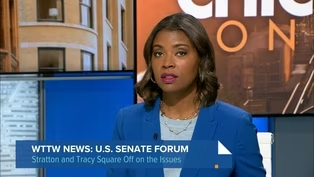
Stratton, Tracy to Face Off in US Senate Candidate Forum. Here's What to Expect
Video has Closed Captions
Brandis Friedman will moderate a live discussion with Juliana Stratton and Don Tracy. (4m 1s)
 New
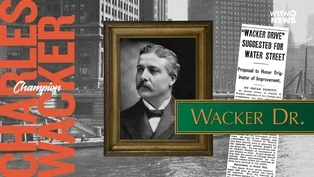
WTTW News Explains: The History of Lower Wacker Drive
Video has Closed Captions
This history of Chicago's iconic Lower Wacker Drive. (2m 51s)
Providing Support for PBS.org
Learn Moreabout PBS online sponsorship New Episode
- News and Public Affairs

Top journalists deliver compelling original analysis of the hour's headlines.
 New Episode
- News and Public Affairs

Today's top journalists discuss Washington's current political events and public affairs.

 New Episode
 New Episode
 New Episode
 New Episode




 New Episode


Support for PBS provided by:
Chicago Tonight is a local public television program presented by WTTW
WTTW video streaming support provided by members and sponsors.